AV and Control Systems for Yachts
The environmental, networking, power, and usability requirements that make marine integration different.
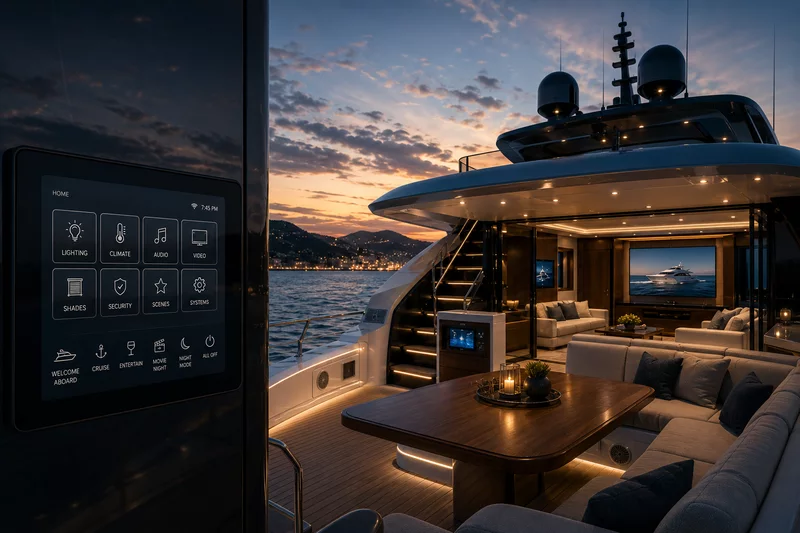
Modern yachts are expected to deliver the comfort, entertainment, and automation found in luxury homes, but the marine environment introduces technical challenges that demand specialized planning.
Salt exposure, constant vibration, constrained installation space, changing power sources, and intermittent connectivity all influence how audiovisual and control systems should be designed. At AVgator, we prioritize reliability, ease of use, and long-term serviceability for private yachts, expedition vessels, and commercial marine applications.
Successful integration begins with the operating environment rather than a list of equipment. This guide explains the planning decisions owners, builders, naval architects, designers, and marine contractors should make before installation begins.
Why Marine Integration Is Different
A yacht is more demanding than a residential property. Every onboard technology system must operate despite movement, humidity, vibration, temperature changes, and limited maintenance access. Replacing equipment after launch can require dismantling cabinetry or significant yard work.
Successful marine integration focuses on reliability, environmental protection, efficient use of space, power management, network resilience, simple operation, and service accessibility. The objective is a system that continues to operate consistently throughout years of cruising.
Begin With the Owner's Lifestyle
Technology should support how the yacht is actually used. Every marine project should begin by understanding the owner's priorities:
- Will the yacht be used for weekend cruising or extended voyages?
- How many cabins need entertainment systems?
- Is remote vessel monitoring important?
- How frequently will guests use the yacht?
- Will owners or guests work and hold meetings onboard?
- Which outdoor areas need audio coverage?
These daily-use patterns determine the appropriate level of automation, networking, and AV infrastructure.
Build a Reliable Marine Network
Entertainment, security, lighting control, automation, remote monitoring, and selected navigation-support systems increasingly share network infrastructure. Unlike a home, a yacht may transition frequently among marina Wi-Fi, cellular service, and satellite internet.
A professional marine network can include managed switches, segmented VLANs, automatic WAN failover, secure remote access, monitoring, and centralized equipment management. The design must remain stable through connection changes while being understandable and maintainable throughout the vessel's life.
Consider Power From the Beginning
Onboard systems may operate from shore power, generators, inverters, or battery banks. Loads must be managed to protect sensitive electronics and avoid unnecessary consumption.
- Equipment power budgets and distribution
- UPS systems and battery-backup strategy
- Surge protection and clean power
- Generator and shore-power transition behavior
- Orderly shutdown and restart sequences
Good power planning improves reliability and can extend equipment life.
Design Entertainment Around the Yacht
Salon
The primary entertainment space may combine a large-format display, surround sound, hidden speakers, media streaming, and integrated lighting scenes.
Owner's suite
The owner's suite usually prioritizes simplicity and comfort through television, multiroom audio, lighting control, and motorized shades where appropriate.
Guest cabins
Guest controls should be immediately understandable while minimizing maintenance and support calls.
Outdoor areas
Cockpits, flybridges, and aft decks need equipment suited to marine exposure and even sound coverage that provides a satisfying experience without unnecessarily disturbing neighboring vessels.
Choose Marine-Appropriate Equipment
Not every residential product belongs on a yacht. Equipment selection and placement must consider corrosion resistance, humidity, operating temperature, ventilation, mechanical vibration, salt exposure, mounting security, and compact installation dimensions.
Locations must also permit future service without unnecessary dismantling of finished interiors. Serviceability deserves the same attention as the initial installation.
Keep Control Simple
Luxury yachts can contain dozens of interconnected systems, yet occupants should never feel overwhelmed by the technology. Unified touch panels, wall keypads, mobile devices, and dedicated remotes can replace a collection of unrelated controls.
Each scene can coordinate lighting, audio zones, video, climate, window coverings, security, and equipment power. An Evening Entertainment command, for example, might dim salon lighting, activate deck lighting, select audio zones, power the display, and adjust climate for occupancy.
Plan for Remote Monitoring
Owners may spend significant time away from their vessels. Secure remote support can allow authorized personnel to verify status, receive alerts, monitor network health, troubleshoot, perform approved updates, and coordinate service visits.
Remote access should use strong authentication, defined permissions, encrypted connections, logging, and a clear offboarding process. The goal is to reduce downtime without creating unnecessary exposure.
Serviceability and Future Technology
Marine systems should remain accessible long after installation. Rack organization, cable identification, documentation, spare capacity, ventilation, configuration backups, and future expansion must be part of the original design.
Because technology evolves faster than most yachts, infrastructure should include spare network capacity, additional conduit pathways, rack expansion space, flexible programming, documented wiring, and upgrade-friendly layouts. These decisions reduce future installation costs and extend the useful life of the system.
Common Planning Mistakes
- Using unsuitable residential equipment in harsh marine environments
- Providing inadequate ventilation or service access
- Failing to document and label cabling
- Ignoring future expansion
- Underestimating network and connectivity requirements
- Planning power too late
- Creating excessively complicated user interfaces
Resolving equipment locations, power, ventilation, pathways, interfaces, and service clearances during design is far easier than correcting them after launch.
How AVgator Helps
AVgator designs complete audiovisual, networking, lighting-control, and automation systems for marine projects with an emphasis on reliability, usability, and long-term support.
Our work can include AV system design, yacht networking and Wi-Fi planning, audio and video distribution, lighting-control integration, automation programming, remote monitoring, documentation, commissioning, and ongoing technical support.
We coordinate with yacht owners, builders, naval architects, marine electricians, interior designers, and shipyards from early planning through final commissioning. Rather than recommending isolated products, we develop a technology strategy tailored to the vessel's operational requirements.
Frequently Asked Questions
What makes yacht AV systems different from home automation?
Marine systems must withstand vibration, humidity, salt exposure, changing power sources, constrained installation space, and difficult service access while remaining intuitive for owners, guests, and crew.
Can smart-home automation platforms be used on yachts?
Many professional automation platforms can be adapted for marine use when the system architecture, equipment selection, power, ventilation, interfaces, and service plan are designed for the vessel.
Why is networking so important onboard?
Entertainment, lighting control, automation, security, communications, and remote monitoring all depend on the network. A professional design also manages transitions among marina Wi-Fi, cellular, and satellite connections.
Can yacht systems be monitored remotely?
Yes. Secure remote access can allow authorized technicians to monitor equipment health, diagnose issues, perform approved updates, and resolve some problems without an onboard service visit.
Should marine equipment be different from residential equipment?
Equipment should be selected for the actual installation environment. Corrosion resistance, humidity, vibration, temperature, ventilation, salt exposure, mounting, and service access all affect long-term reliability.
How is entertainment distributed throughout a yacht?
Many yachts use centralized audio and video distribution so cabins, salons, and outdoor areas can access shared sources through consistent, simple controls.
When should AV systems be planned during yacht construction?
Planning should begin during design and engineering so power, networks, rack locations, ventilation, cable pathways, user interfaces, and service access can be coordinated before finishes are installed.
Can lighting, audio, climate, and security operate together?
Yes. An integrated control system can coordinate these technologies through scenes such as Welcome Aboard, Cruise, Entertain, Night Mode, and All Off.
How important is documentation?
Comprehensive labeling, wiring schedules, rack layouts, network diagrams, configuration records, and backups are essential for future troubleshooting, service, and upgrades.
Why choose AVgator for marine integration?
AVgator treats the vessel as a complete technology ecosystem, coordinating AV, networking, automation, lighting, power planning, documentation, commissioning, and long-term serviceability.
Reliable Technology at the Dock and Underway
A successful yacht system works as one maintainable ecosystem. It accommodates the marine environment, changing connectivity, variable power, guest usability, crew workflows, and the practical realities of future service.
Explore AVgator's marine-automation services or schedule a project consultation.