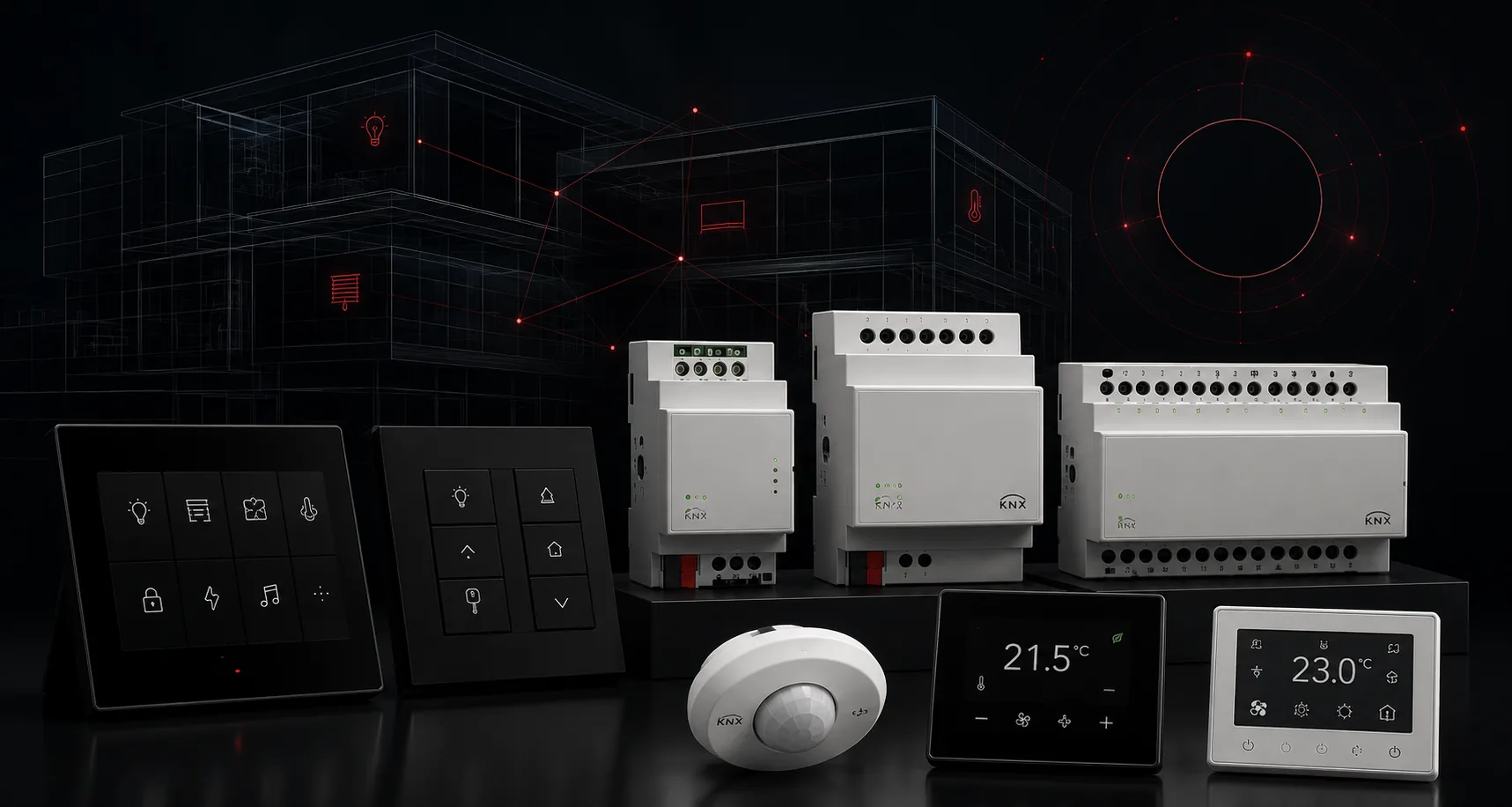
KNX automation controls, sensors, and modules for a connected building

Distributed building control

KNX Building Automation

An open standard for coordinated residential and commercial building automation. AVgator plans the infrastructure, integrations, controls, testing, and documentation around each project’s actual requirements.

Overview

What KNX is and where it fits.

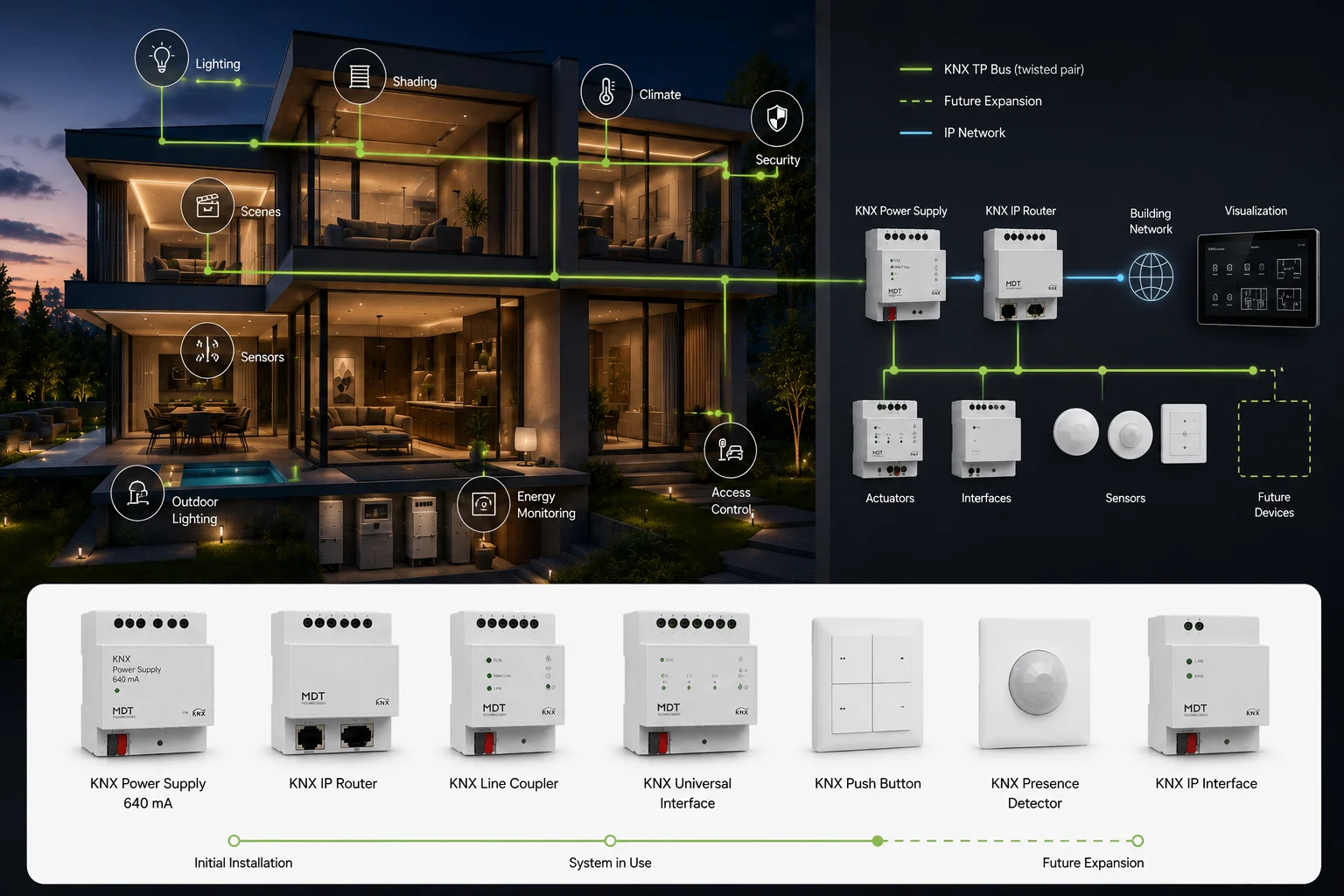
KNX is an open building-automation standard used to coordinate lighting, climate, motorized shading, energy functions, and other compatible systems. Its distributed architecture allows devices to exchange commands and status without placing every essential function in one controller.

It is commonly considered for substantial residences, new construction, and commercial buildings where infrastructure, serviceability, and long-term expansion matter. Product selection, topology, commissioning, and the interfaces to other systems all shape the final result.

Role in the system

What It Does

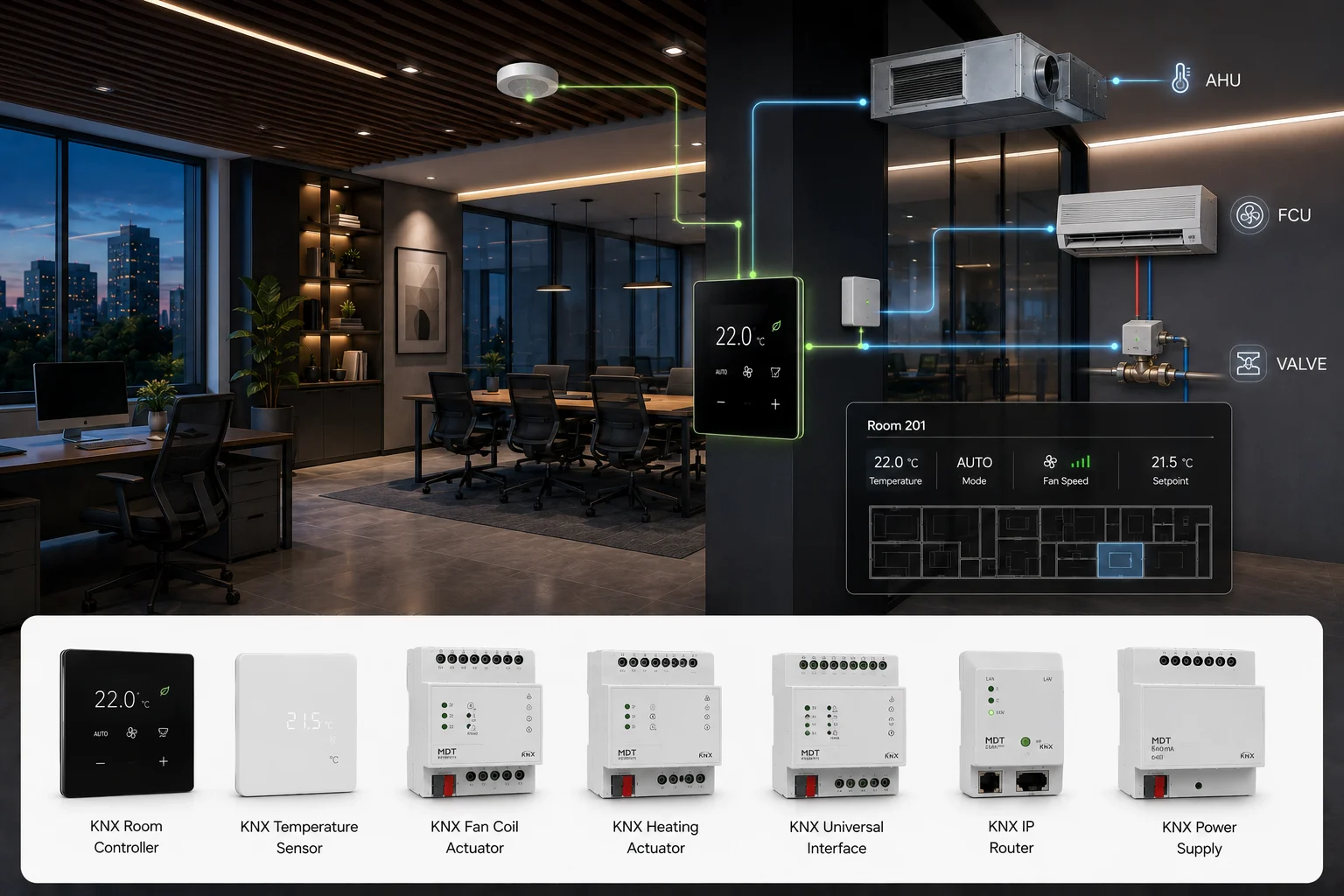
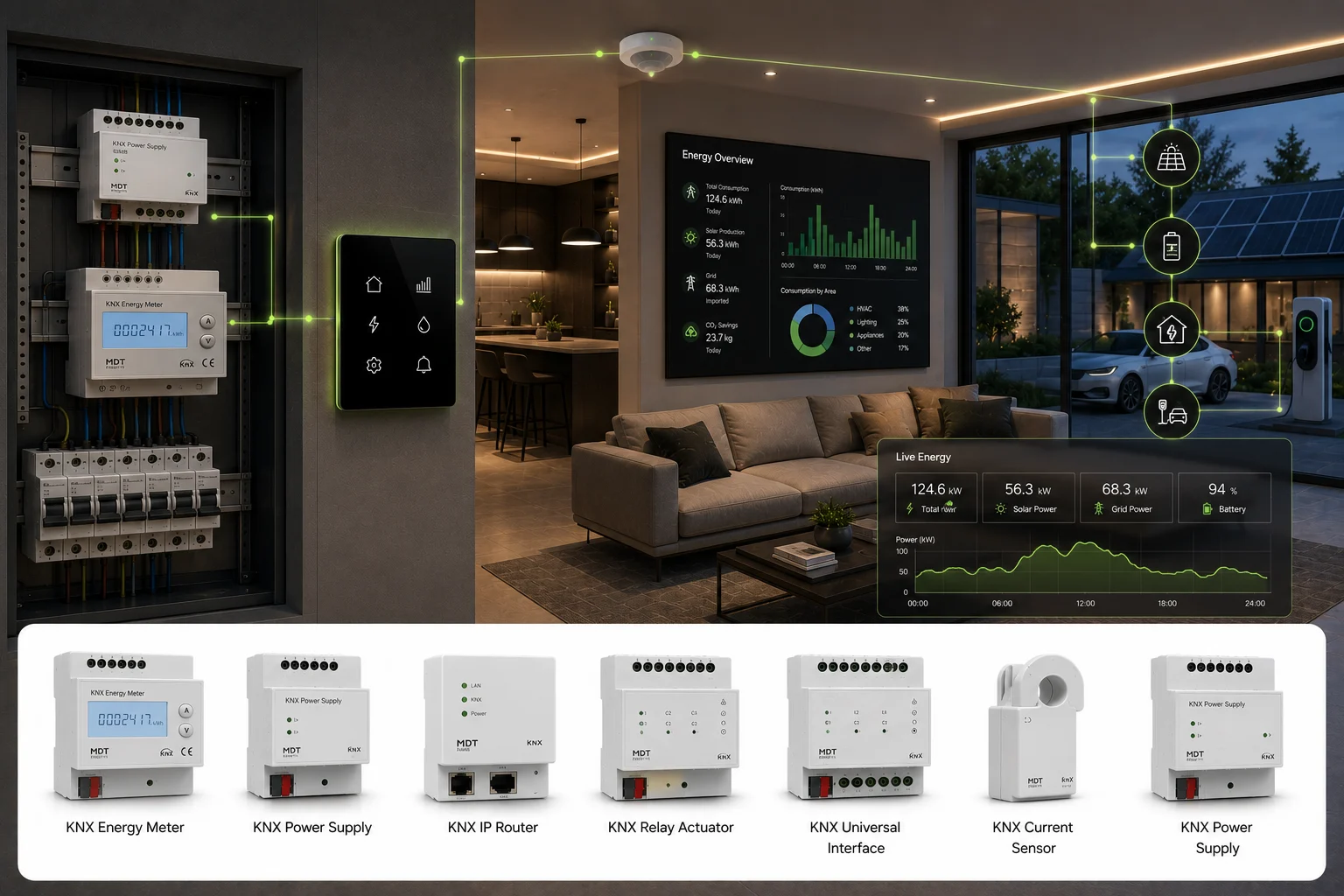
KNX creates a shared control layer for compatible sensors, keypads, actuators, and gateways. A carefully engineered system can link room controls with lighting, HVAC, shades, schedules, and energy data while keeping core building functions locally available.

The available feature set always depends on exact products, software, licensing, interfaces, network design, and project scope.

Key capabilities

Capabilities shaped by system design.

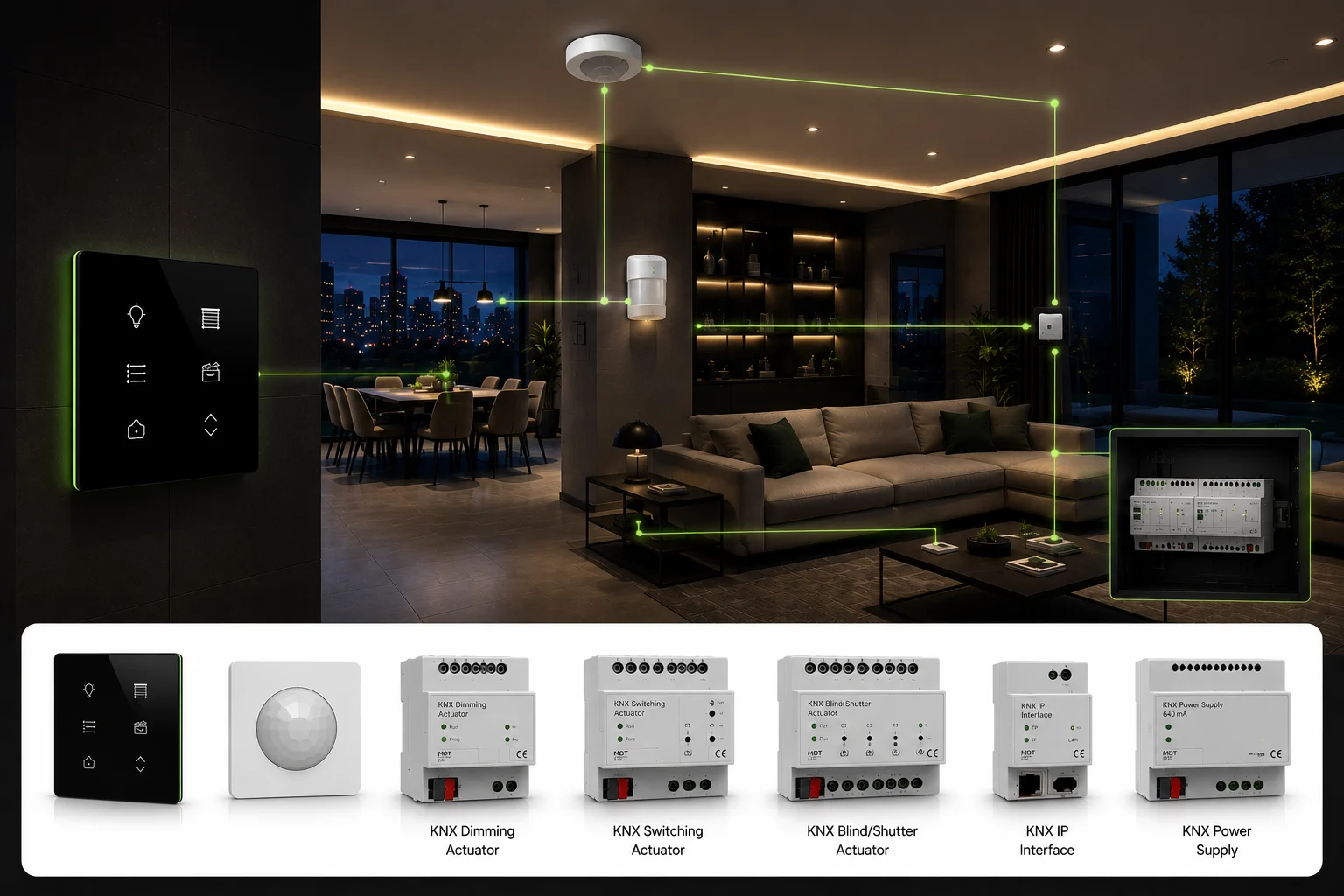
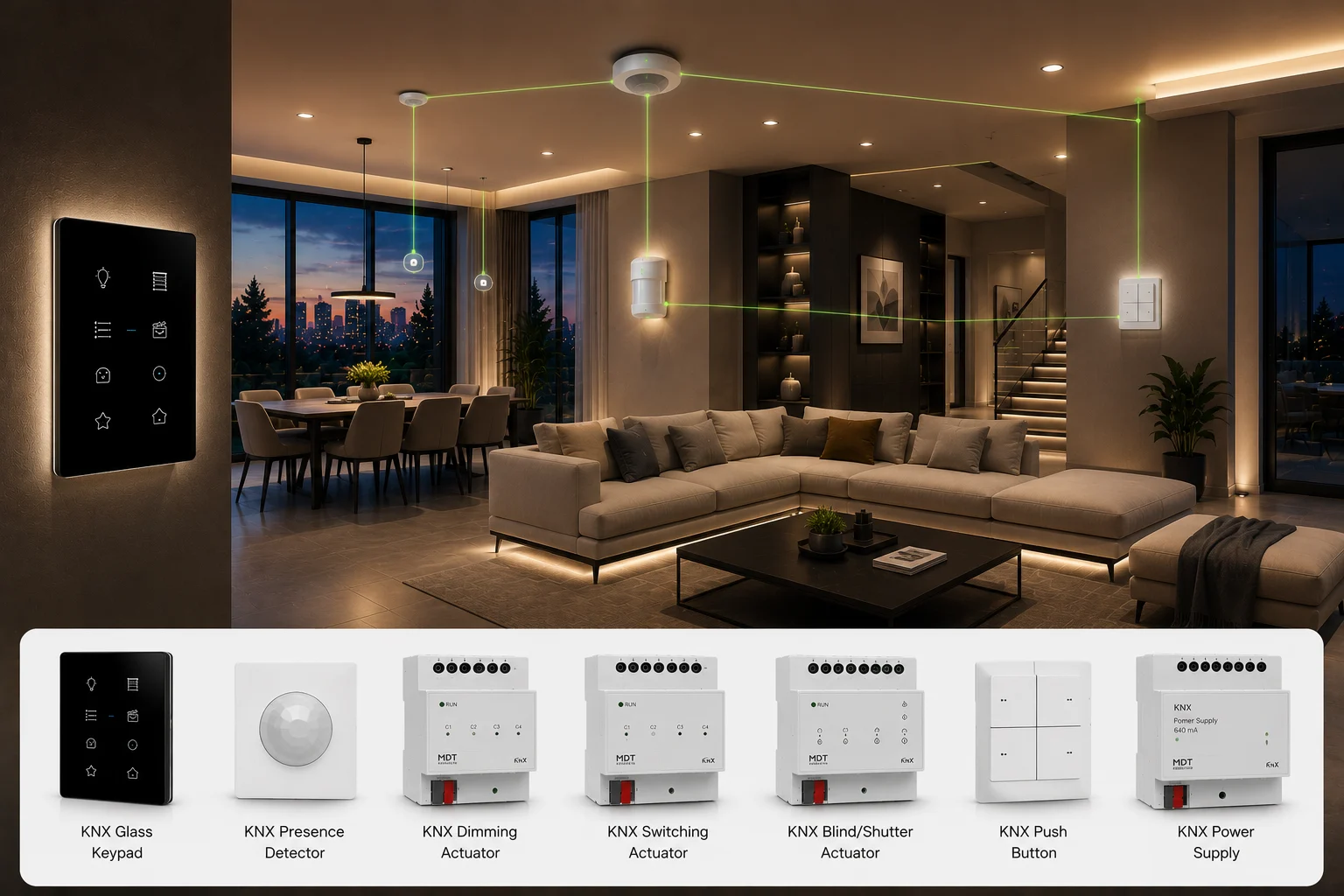
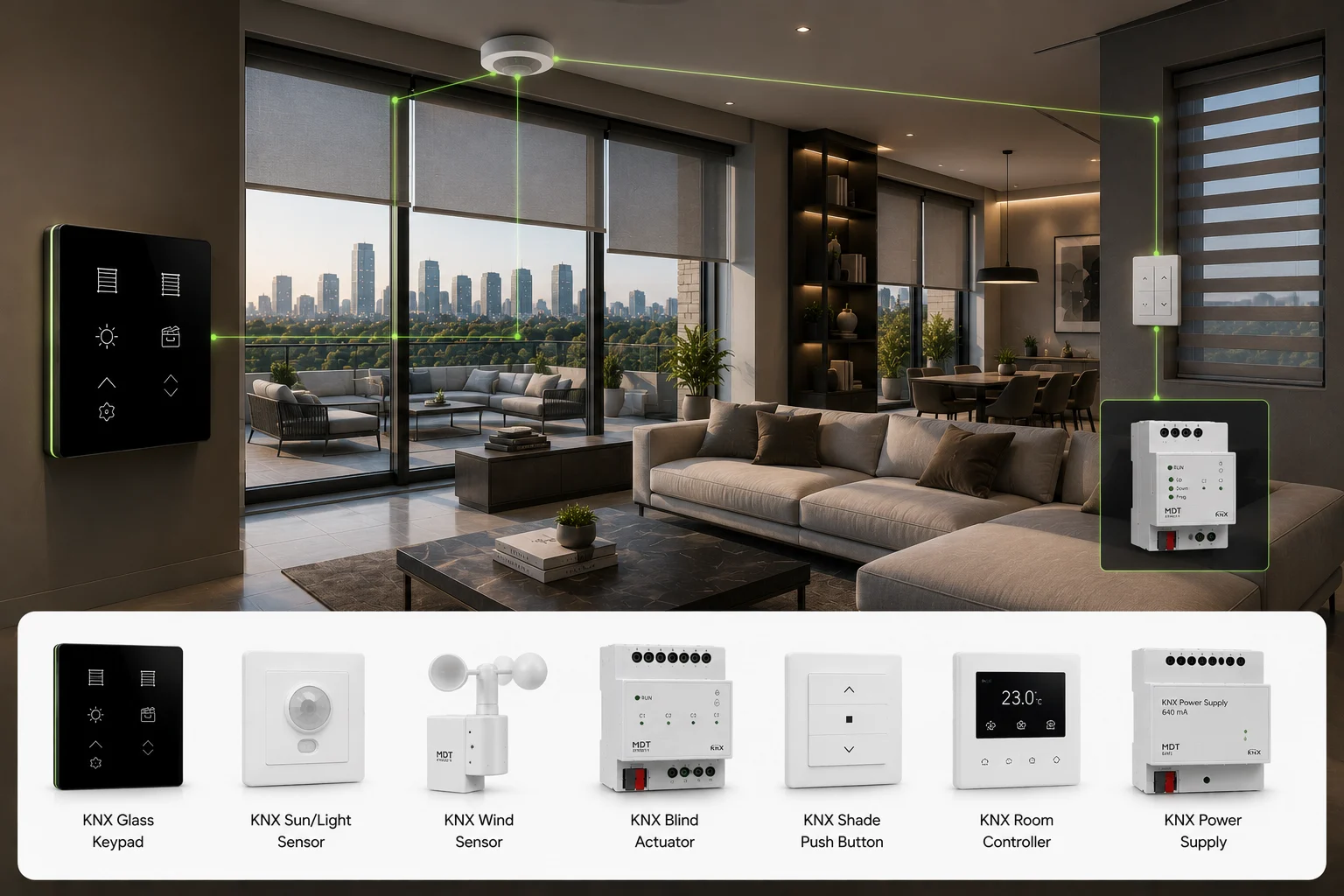
KNX distributed control connecting keypads, sensors, actuators, and a power supply across a modern residence

Featured capability

Distributed Control

KNX distributed control places automation intelligence across compatible sensors, keypads, actuators, and interfaces on a shared building-control bus. This decentralized architecture can keep essential lighting, climate, shading, and room functions operating locally while supporting coordinated commands, status feedback, serviceability, and carefully planned system integration.

Best-fit applications

Where KNX is commonly considered.

Luxury residences

Coordinated control across many rooms and building systems.

New construction

Projects that can plan bus wiring and panel requirements early.

Large properties

Distributed controls serving multiple floors, wings, or structures.

Commercial buildings

Repeatable room functions and building-level coordination.

Long-term flexibility

Projects prioritizing documented infrastructure and future adaptation.

AVgator’s role

How AVgator Uses KNX

Our work connects discovery, system architecture, compatibility review, infrastructure planning, implementation, commissioning, documentation, and support.

  1. 01

    Define room functions and control priorities during discovery.

  2. 02

    Plan bus topology, panels, power, network interfaces, and coordination with electrical and mechanical trades.

  3. 03

    Configure and test scenes, schedules, sensors, gateways, and user controls.

  4. 04

    Document addresses, functions, integration points, and operating guidance for support.

Integration considerations

Details that determine reliability.

  • Confirm product-level compatibility and required KNX interfaces.
  • Coordinate bus power, topology, addressing, and enclosure capacity.
  • Define responsibility for HVAC, lighting, shade, AV, and third-party gateways.
  • Retain commissioning files and accurate as-built documentation.

Explore the architecture

Digital Lighting-Control Protocol

DALI

A digital protocol for addressable luminaires, groups, scenes, commands, and status feedback.

Learn about DALI

Building Automation Protocol

BACnet

A communication protocol used by building-automation and management systems for monitoring and control.

Learn about BACnet

Equipment Communication Protocol

Modbus

A protocol used to exchange data with meters, controllers, power systems, and building or industrial equipment.

Learn about Modbus

Control and Automation Ecosystem

Crestron

A control ecosystem for tailored residential automation, commercial AV, and collaboration spaces.

Learn about Crestron

Frequently asked questions

Common questions about KNX.

Browse all FAQs
What is KNX used for?

KNX is used to coordinate compatible building functions such as lighting, climate, shading, sensors, energy monitoring, and supervisory controls.

Can KNX control lighting, climate, and shades?

Yes, when the selected devices, actuators, and gateways support the required functions and the system is designed and commissioned accordingly.

Can KNX integrate with AV systems?

Often through supported gateways or control-system interfaces. The exact commands, feedback, licensing, and failure behavior must be confirmed for each project.

Is KNX only for new construction?

No, but new construction usually offers the clearest path for bus wiring and panel planning. Existing buildings require a survey of pathways and installed infrastructure.

Can an existing KNX system be expanded?

Frequently, provided the project files, bus capacity, topology, compatible products, and system access are available for review.

Planning a KNX-Based Project?

Start with the space, intended outcomes, existing infrastructure, and systems that need to work together.