Featured capability
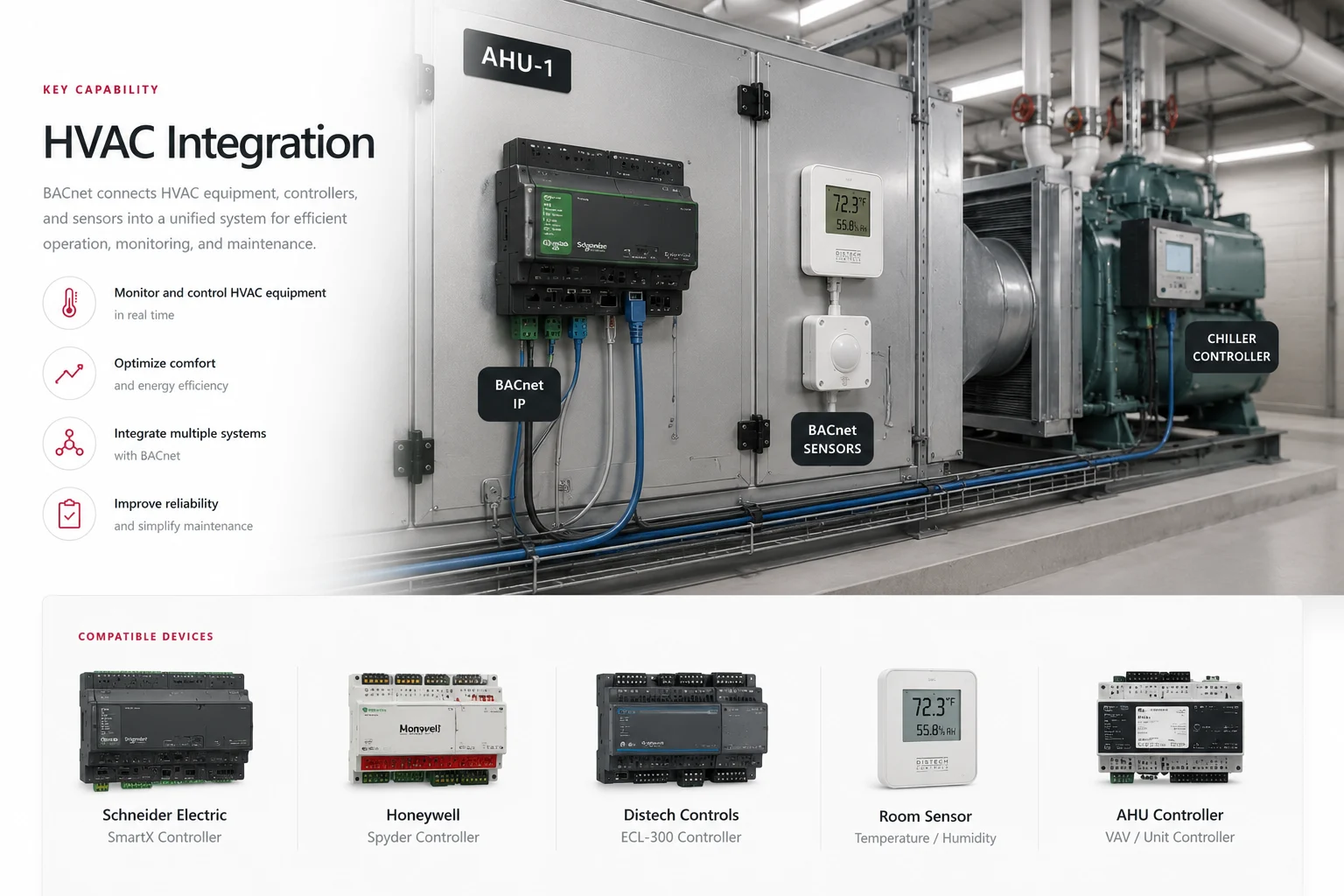
HVAC Integration
BACnet HVAC integration can connect compatible air-handling units, chillers, boilers, pumps, variable-air-volume controllers, sensors, and mechanical control systems with a building-management platform. Available monitoring and control depend on the exact products and exposed BACnet objects, with point lists, units, command priorities, update rates, network architecture, sequences, and failure behavior coordinated during design and commissioning.
Featured capability
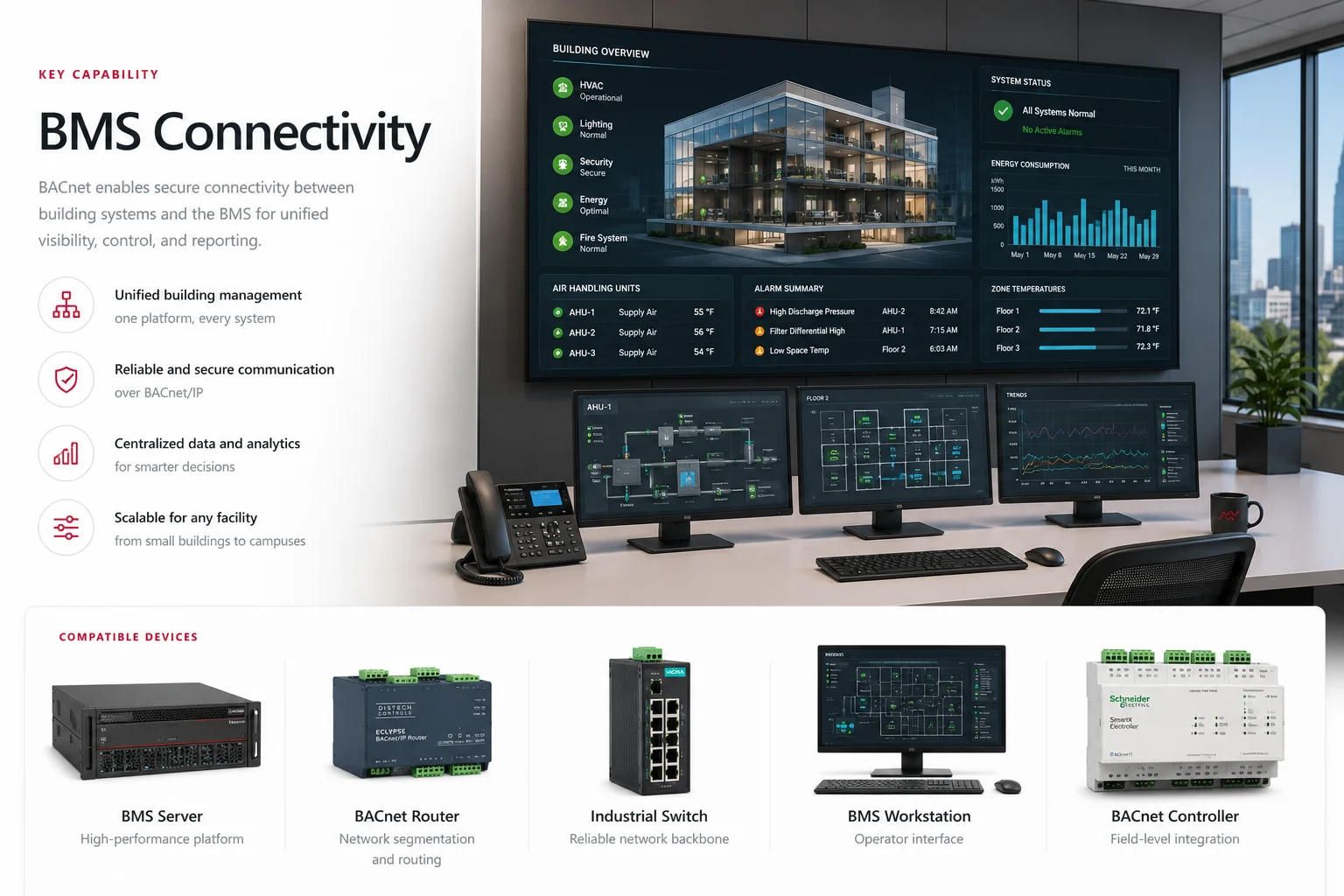
BMS Connectivity
BACnet BMS connectivity can bring selected equipment and subsystem data into a supervisory building-management system for centralized visibility, alarms, trends, reporting, and authorized control. A reliable interface requires coordinated BACnet transport, device addressing, segmentation, routing, point discovery, naming standards, cybersecurity policy, operator permissions, and clear responsibility among controls, mechanical, IT, and facility teams.
Featured capability
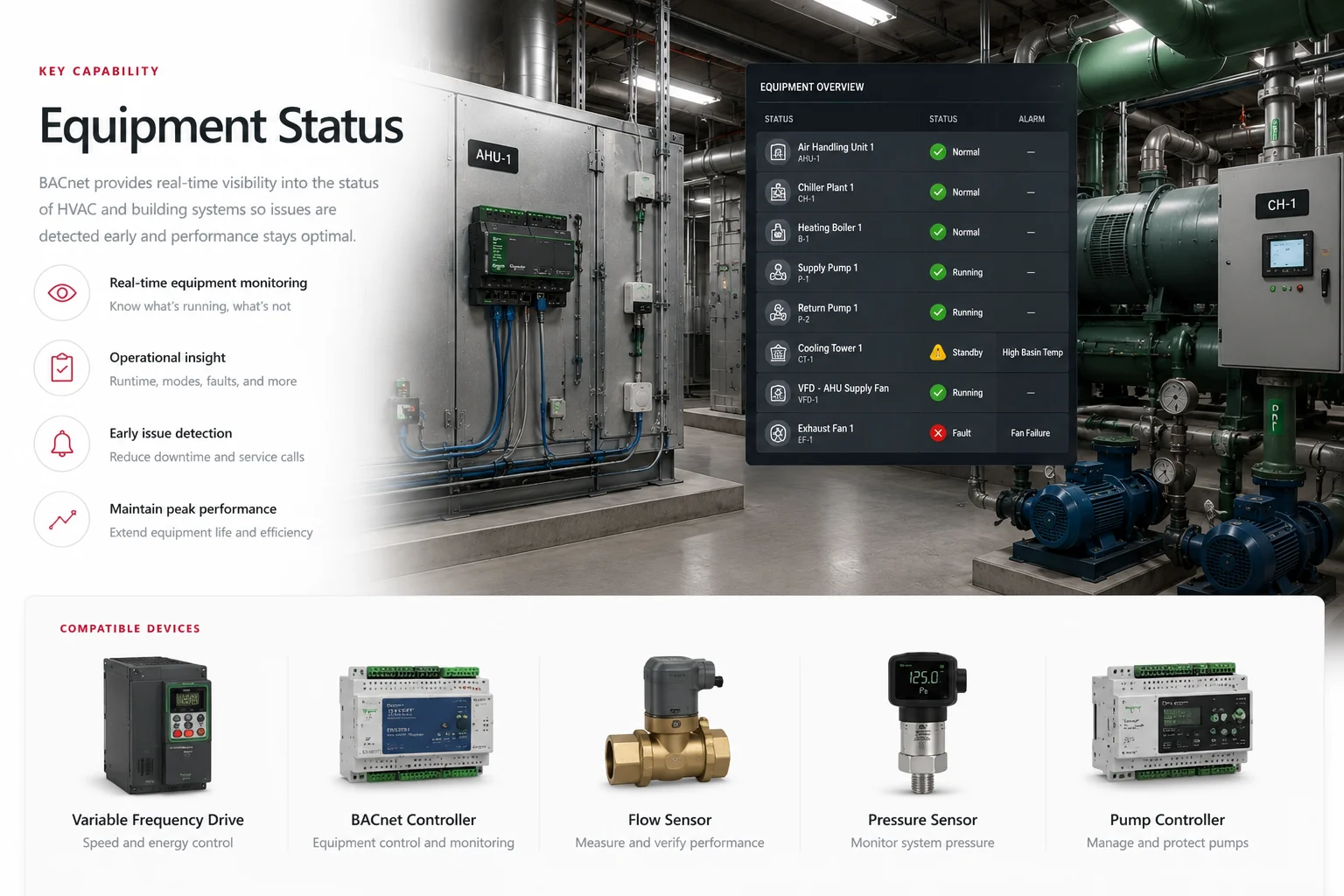
Equipment Status
BACnet equipment status can expose compatible operating modes, runtimes, temperatures, pressures, flow values, fan and pump states, faults, and maintenance indicators to authorized facility teams. Useful diagnostics depend on accurate object definitions, units, alarm logic, polling or change-of-value behavior, timestamps, graphics, and validation against the installed equipment rather than assumptions based only on protocol availability.
Featured capability
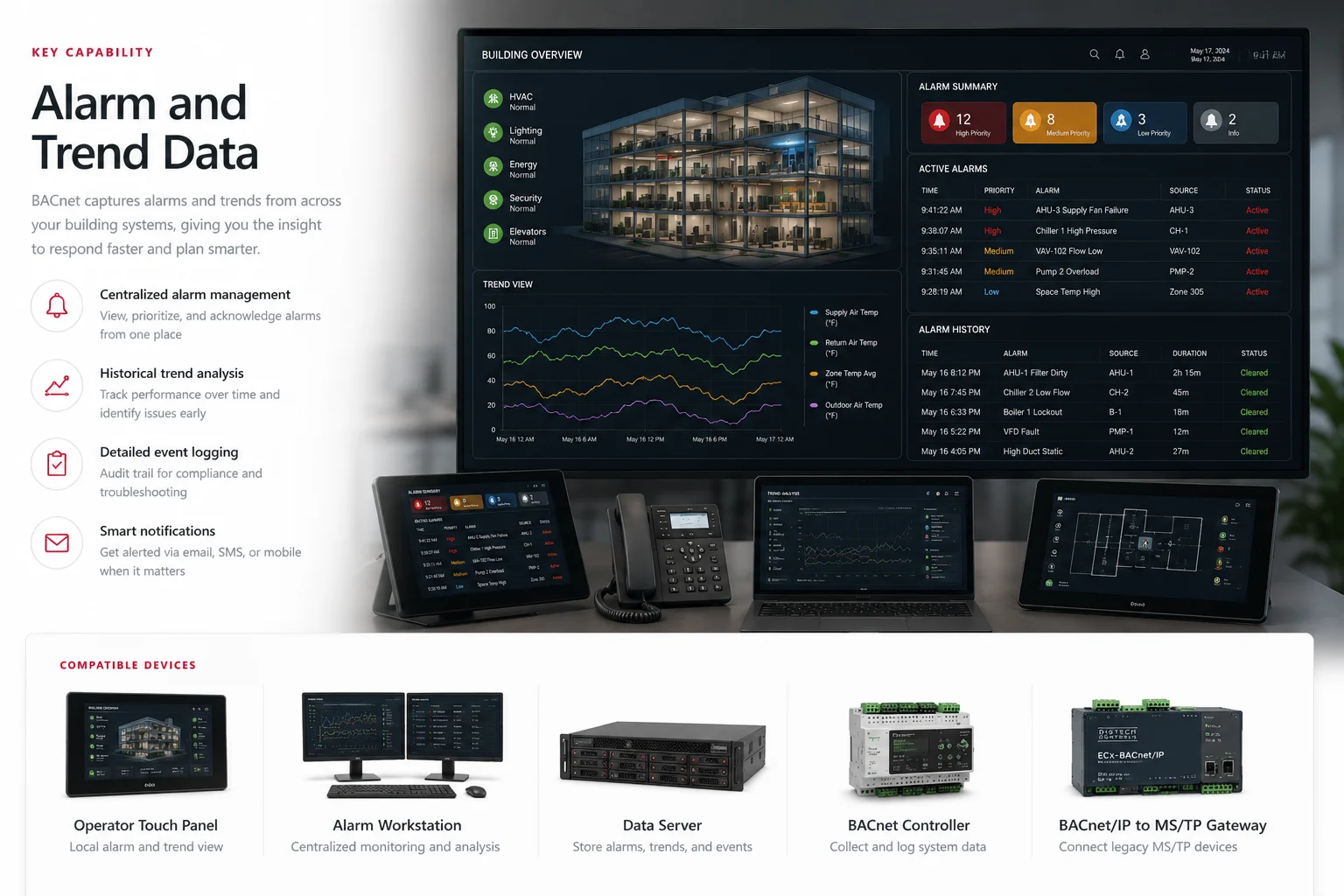
Alarm and Trend Data
BACnet alarm and trend data can support centralized event visibility, historical analysis, performance review, troubleshooting, and maintenance planning when compatible devices expose the necessary objects and services. Effective implementation defines alarm priorities, acknowledgement workflows, notification routing, trend intervals, retention, timestamps, data quality, operator access, and the distinction between an equipment condition and an actionable facility event.
Featured capability
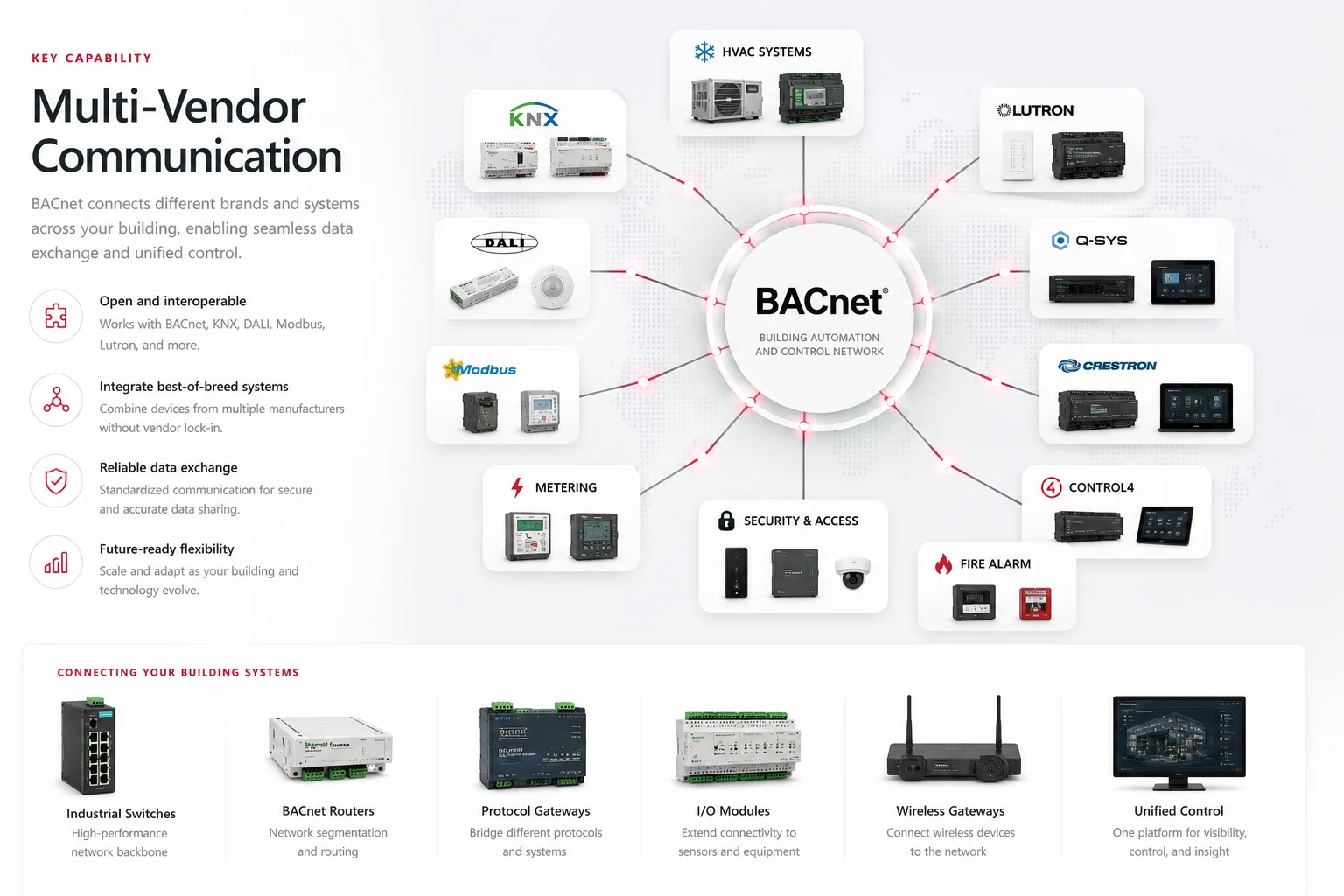
Multi-Vendor Communication
BACnet multi-vendor communication can provide a standardized path for exchanging selected data among compatible controls, gateways, meters, lighting interfaces, room systems, security platforms, and other building equipment. Interoperability still depends on each manufacturer’s implementation, supported profiles and services, object availability, gateway mappings, firmware, licensing, network options, and agreement about which system owns each command or sequence.
Featured capability
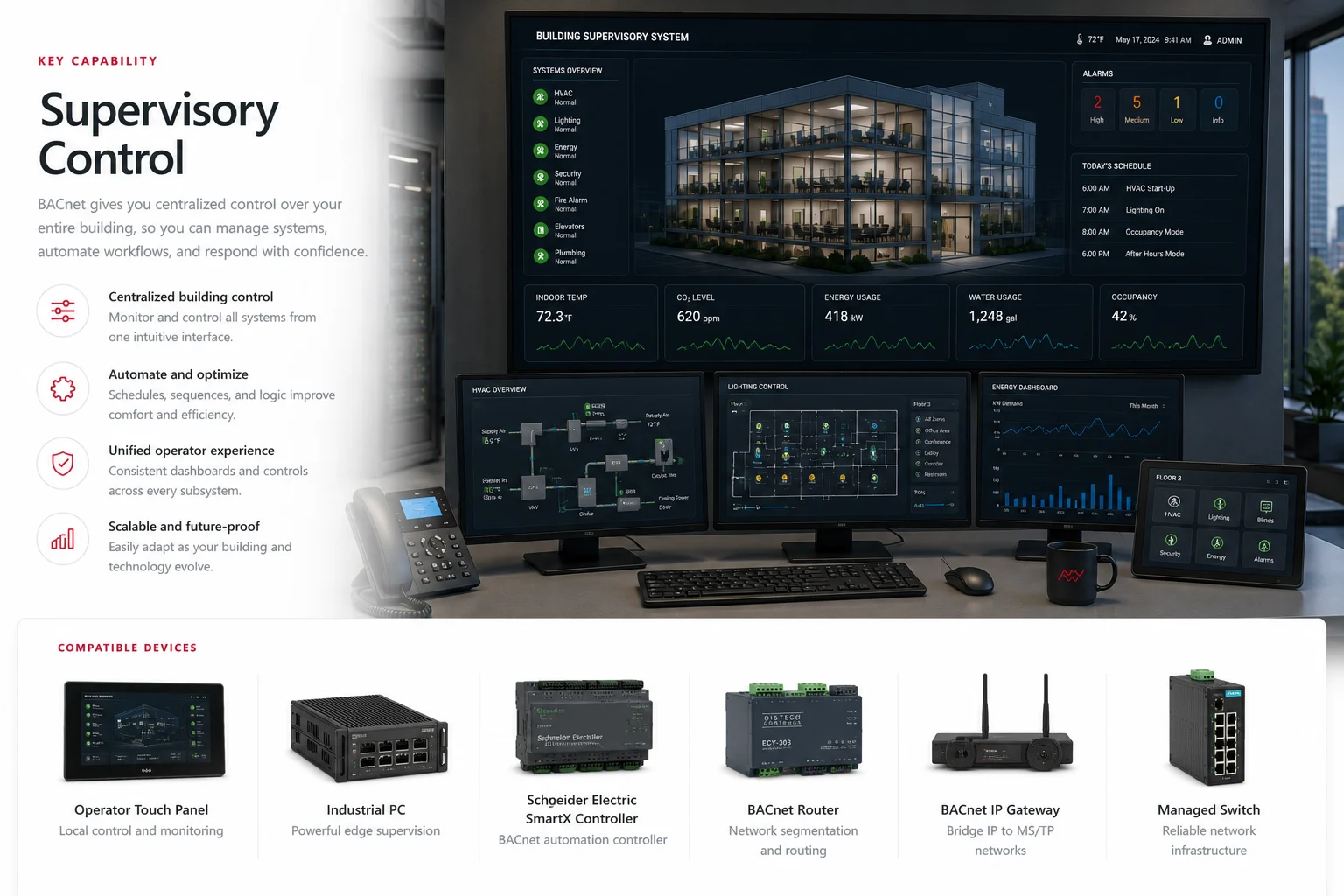
Supervisory Control
BACnet supervisory control can allow authorized systems to coordinate supported setpoints, modes, schedules, occupancy states, and commands across connected building systems. Safe operation requires defined control ownership, priority-array behavior, command release, permissions, limits, fallback states, network resilience, and testing with the exact installed controllers so supervisory actions do not conflict with equipment-level safeties or local sequences.