Featured capability
Meter Integration
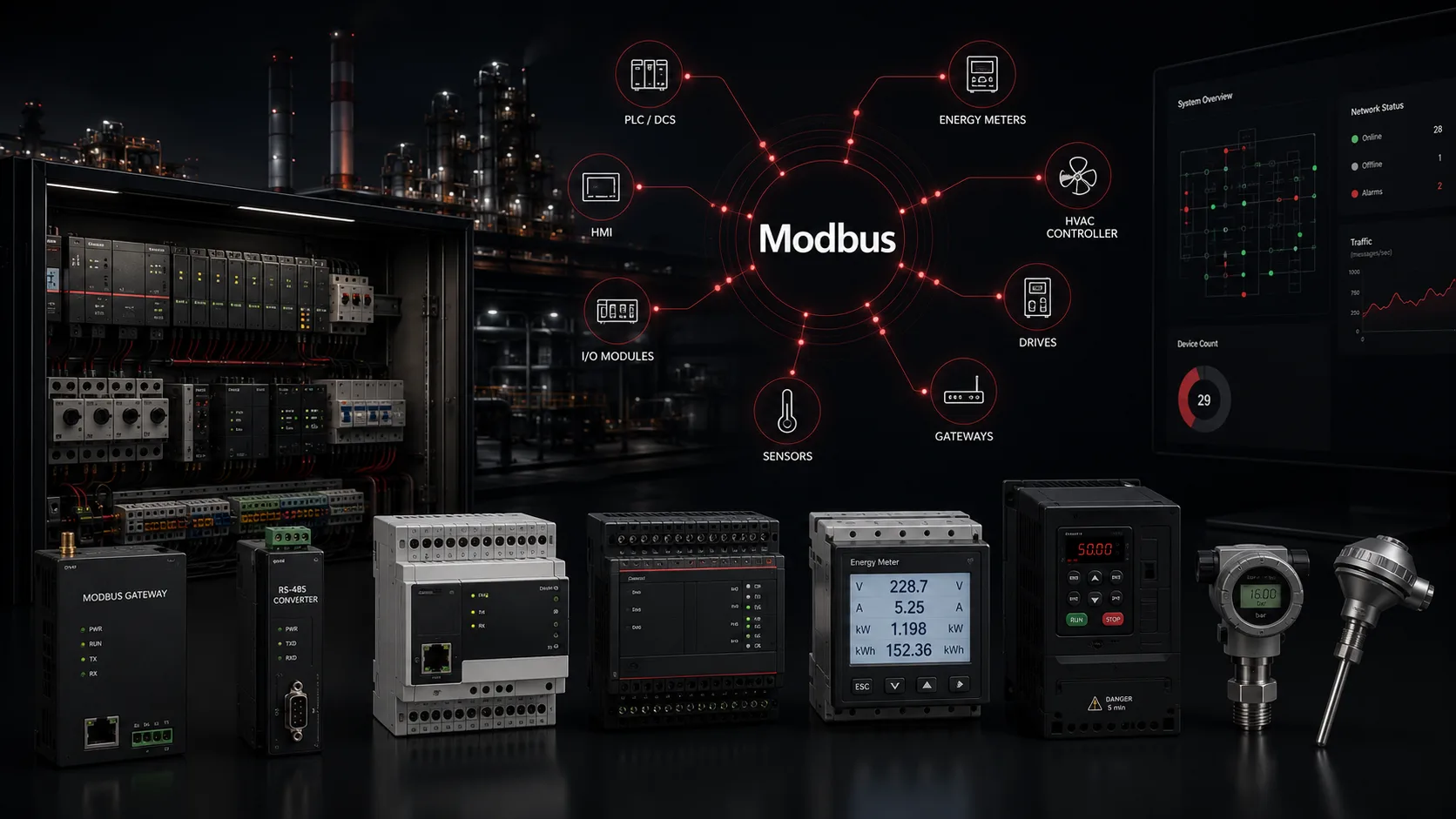
Modbus meter integration can bring compatible electrical, water, thermal, power, and process measurements into a building automation or supervisory control platform. Reliable results depend on the exact meter model, supported Modbus RTU or TCP interface, register documentation, addressing, data types, scaling, polling intervals, and validation against the equipment display.
Featured capability
Equipment Data
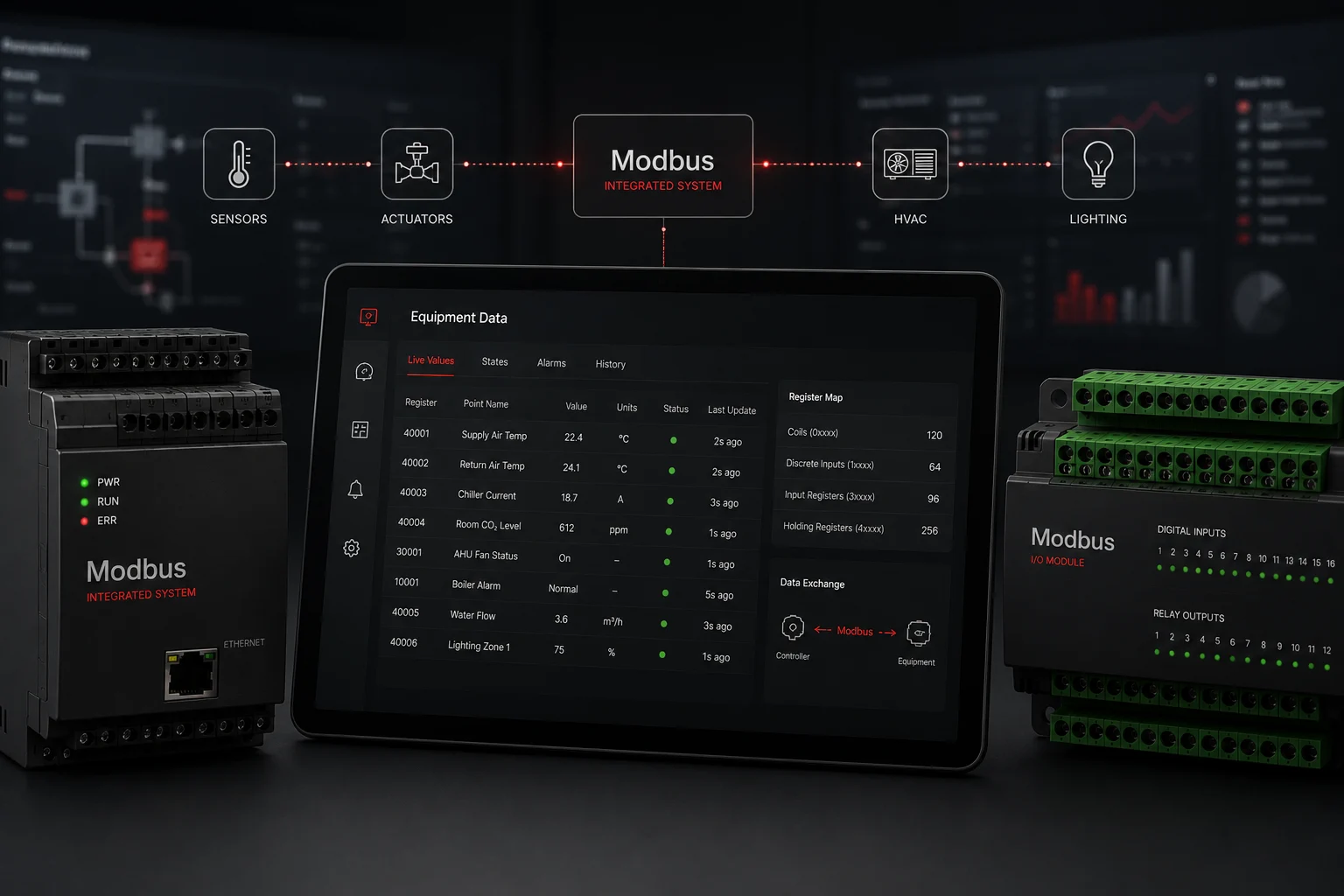
Modbus equipment integration can expose operating values, states, alarms, setpoints, and counters from compatible HVAC equipment, controllers, drives, power systems, and industrial devices. Each point must be identified from manufacturer documentation and checked for units, scaling, signed values, byte order, update behavior, permissions, and safe handling when communication is unavailable.
Featured capability
Controller Communication
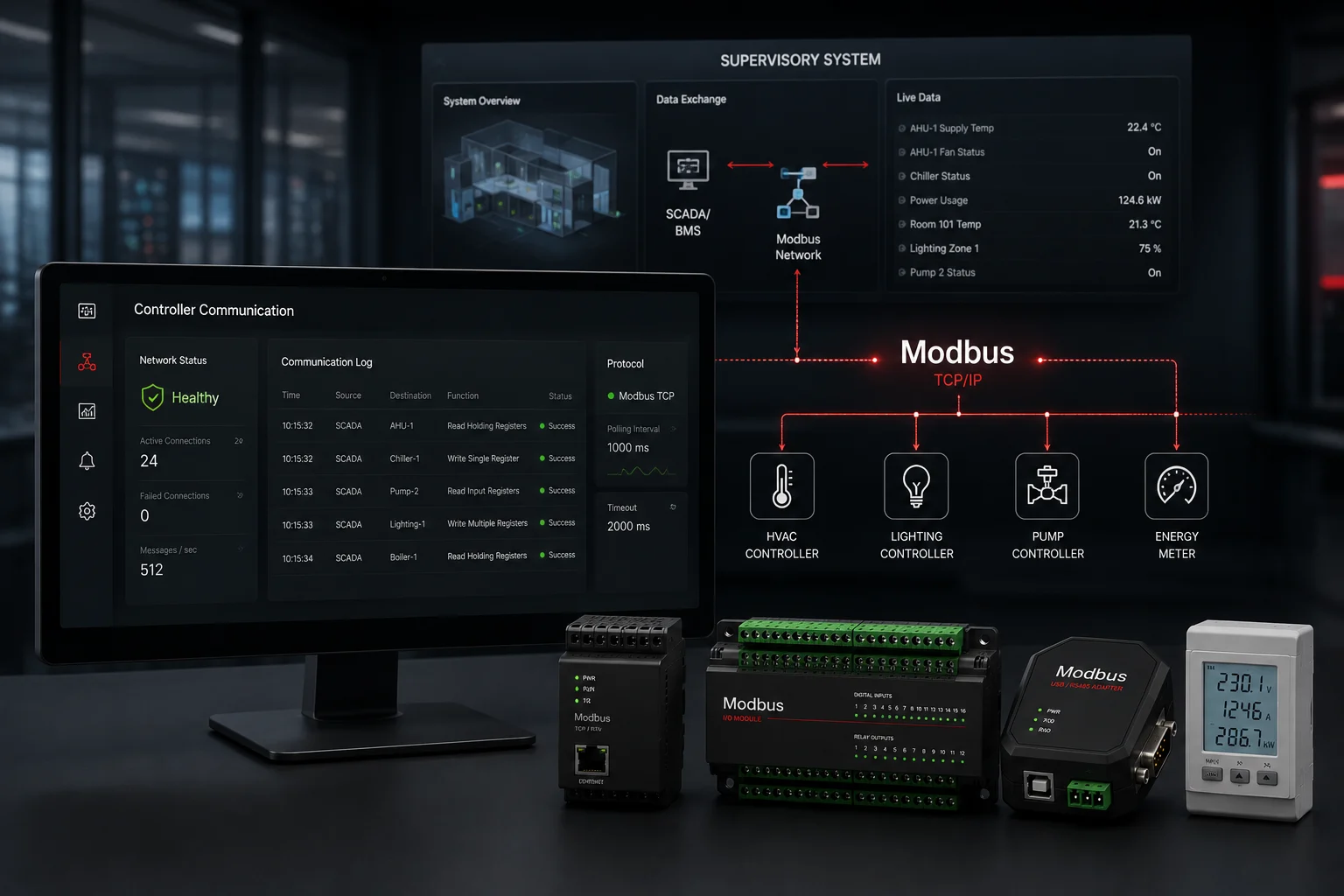
Modbus controller communication allows supervisory systems and approved field controllers to exchange selected data over serial Modbus RTU or Ethernet-based Modbus TCP. A properly engineered integration defines client and server roles, unit identifiers, network addressing, baud settings, polling rates, timeouts, connection limits, write authority, and failure behavior before controls are commissioned.
Featured capability
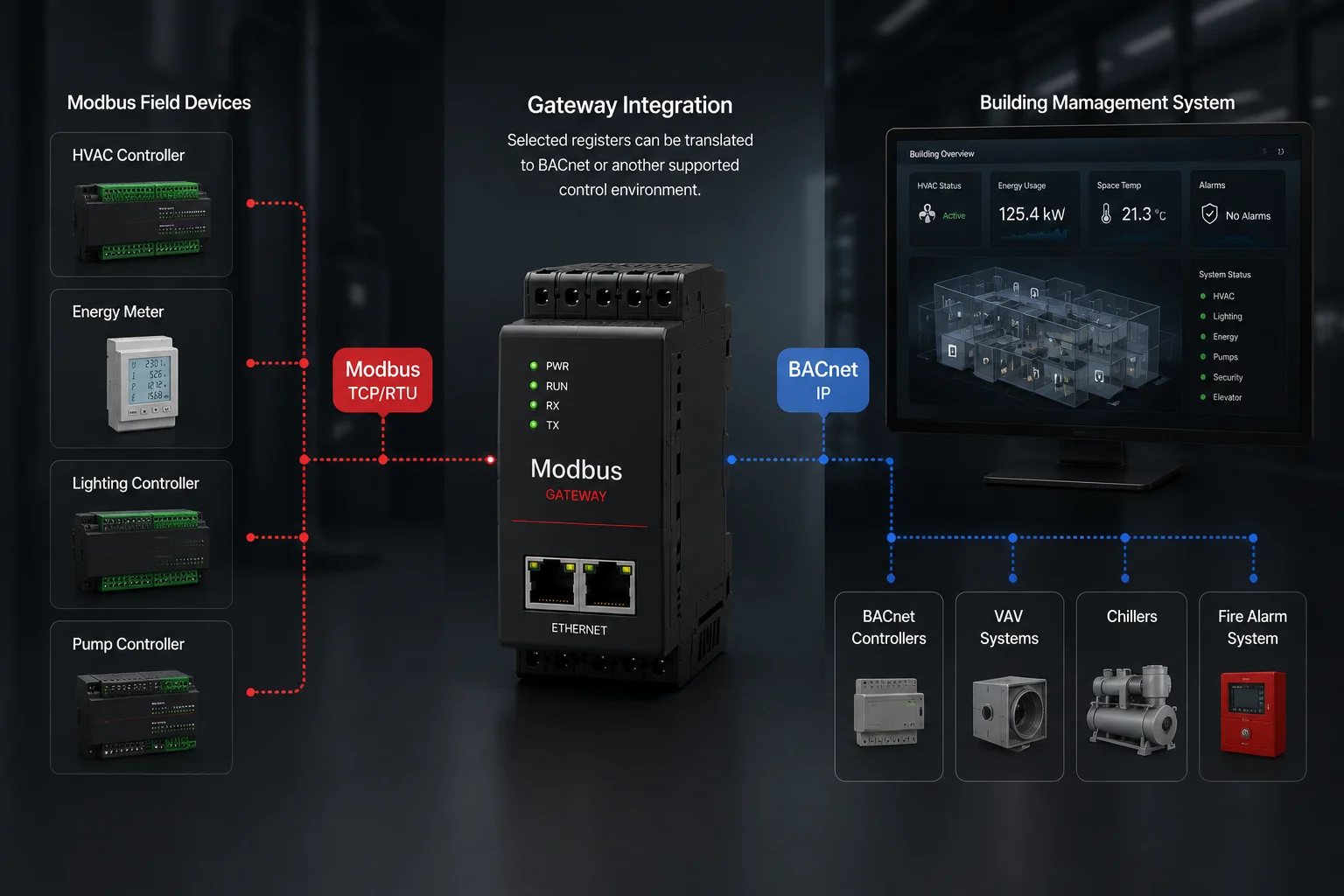
Gateway Integration
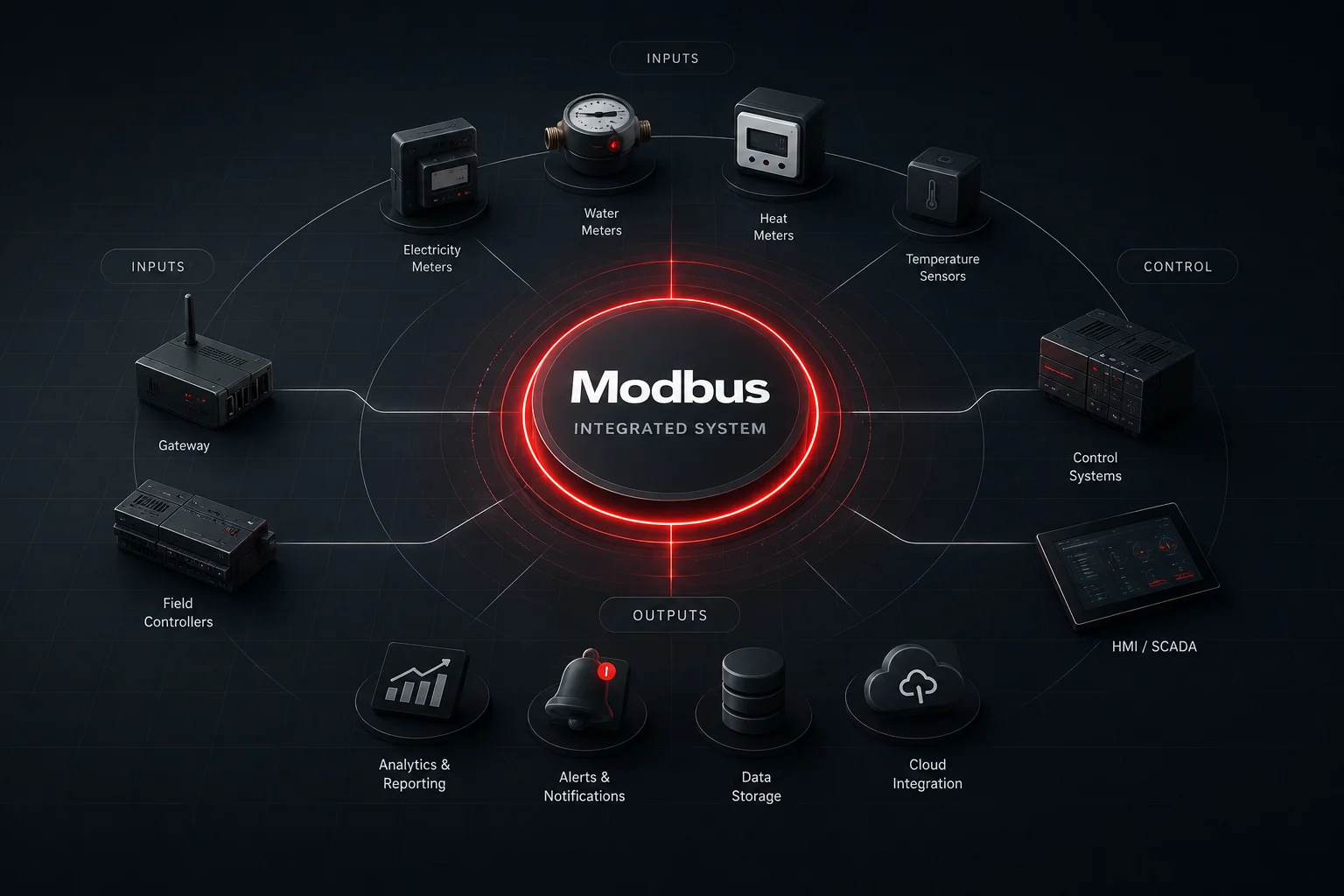
Modbus gateway integration can translate selected registers from meters, HVAC controllers, lighting controls, pumps, and other field devices into BACnet or another supported building-control environment. Successful gateway design requires deliberate point selection, clear control ownership, verified mapping and scaling, network coordination, alarm behavior, and documentation that identifies both sides of every translated value.
Featured capability
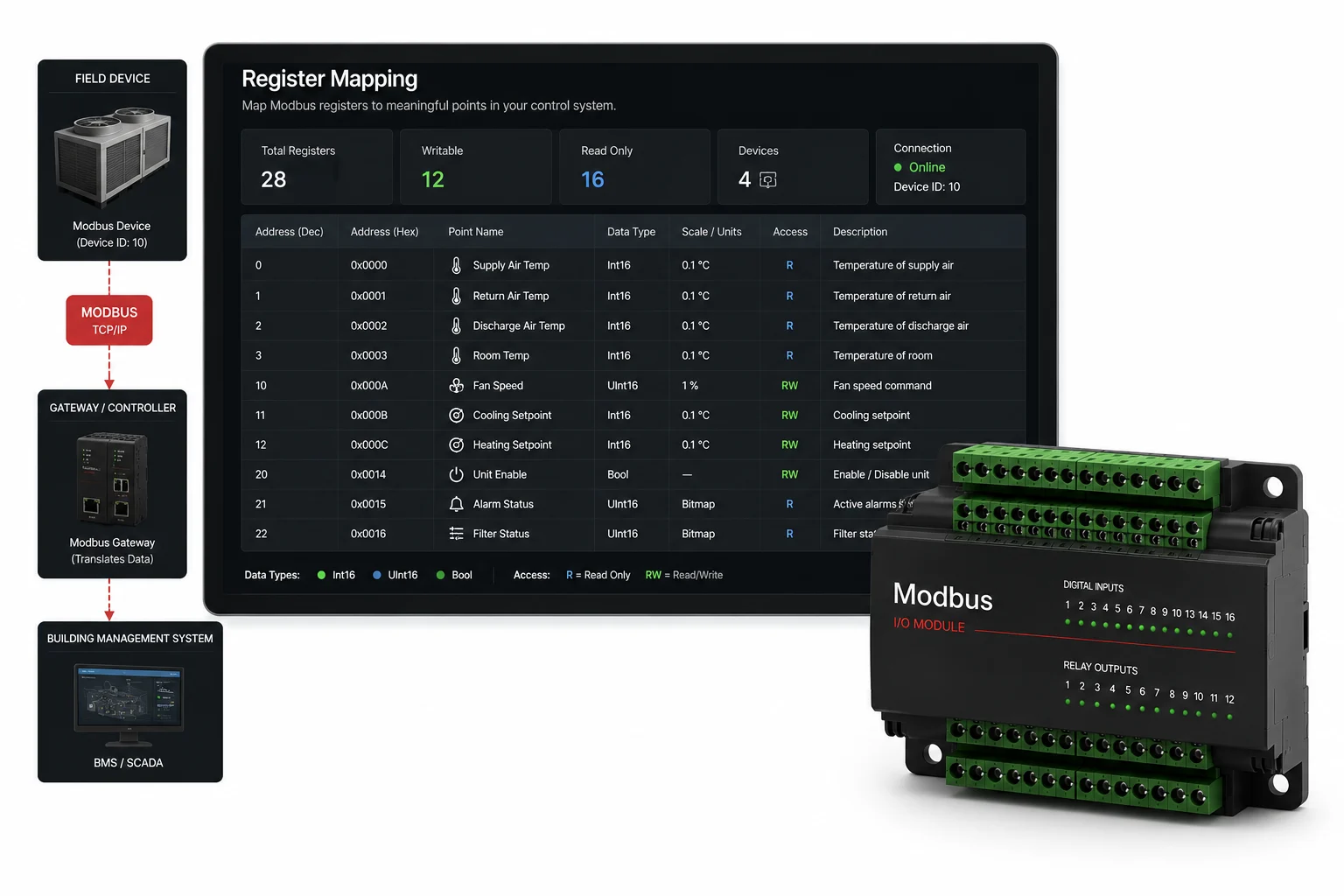
Register Mapping
Modbus register mapping turns device-specific coils and registers into meaningful points for a controller, gateway, SCADA platform, or building management system. Accurate mapping must account for decimal and hexadecimal addressing, register offsets, data types, word and byte order, engineering units, scaling, read or write permissions, valid ranges, and differences between equipment models or firmware revisions.
Featured capability
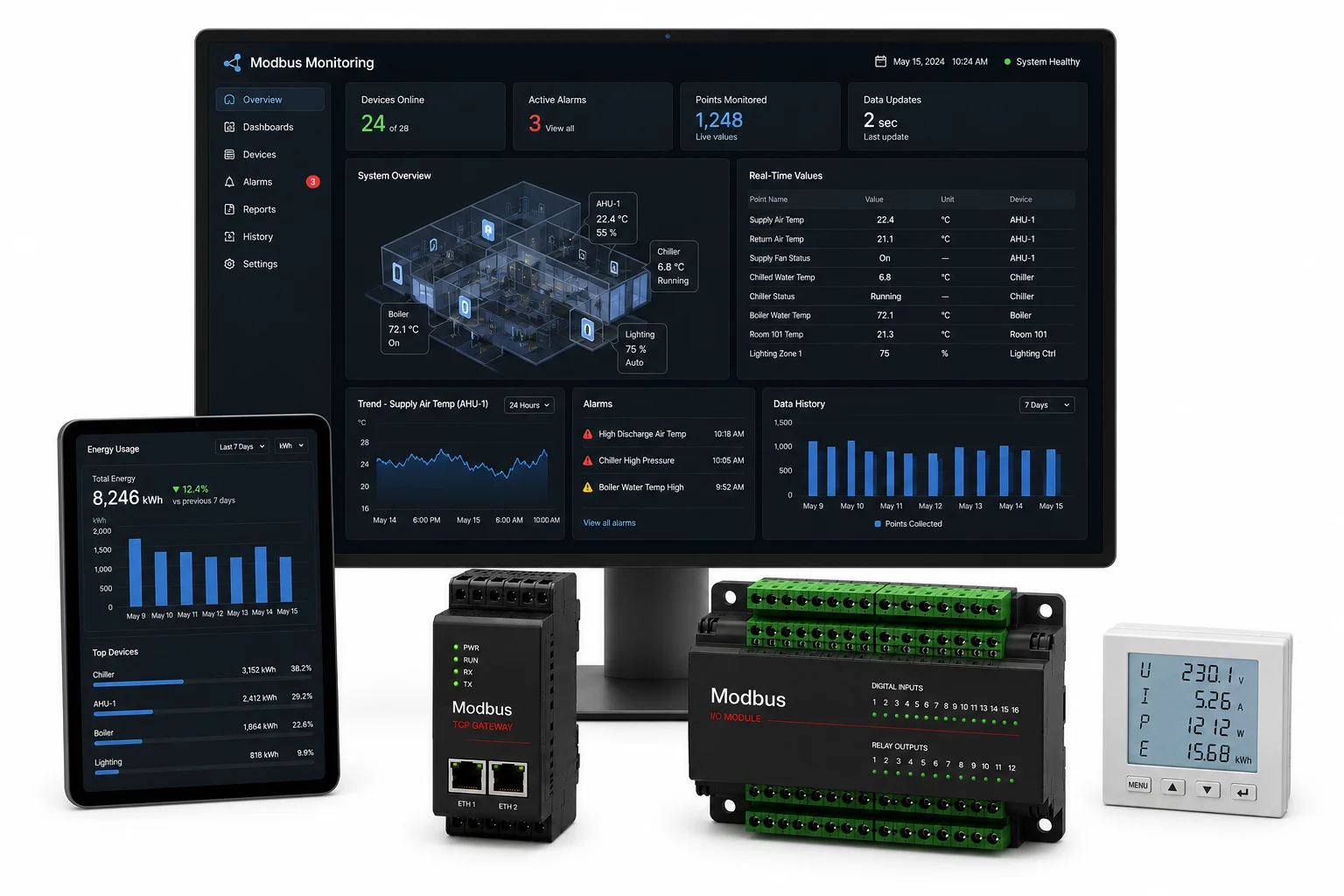
Monitoring and Reporting
Modbus monitoring and reporting can use validated equipment and meter data for live dashboards, trends, histories, alarms, energy summaries, and operational review. The quality of those insights depends on dependable communications, appropriate sampling and retention, consistent point naming, timestamp handling, alarm thresholds, data validation, and a clear distinction between informational monitoring and authorized control.