Adding Lighting Control During a Renovation
How early coordination with the architect and electrician keeps lighting control clean, serviceable, and intuitive.
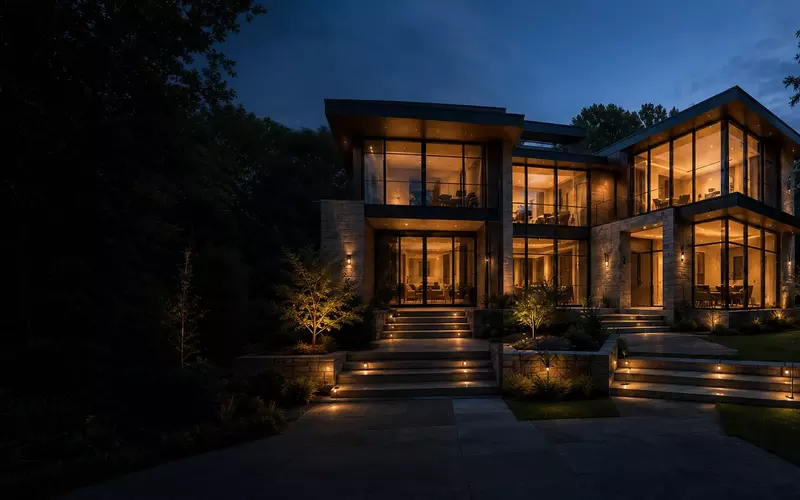
A renovation is an ideal opportunity to improve lighting, comfort, and efficiency, but lighting control is often considered only after wiring and walls are complete.
AVgator brings lighting control into the architectural conversation early so wall stations stay clean, fixtures perform correctly, equipment remains serviceable, and the system can expand.
Renovation Is the Ideal Time to Upgrade
Open walls, electrical changes, and new finishes create the opportunity to replace circuit-by-circuit switching with activity-based scenes such as Welcome Home, Cooking, Dining, Entertain, Movie Night, Good Night, and Away.
Plan Before Electrical Work Begins
Circuit layouts, switch locations, pathways, panel capacity, and low-voltage infrastructure are difficult and expensive to change after rough-in. The control strategy should be defined before wire is pulled.
Coordinate With the Architect
Walls, cabinetry, millwork, ceilings, fixtures, closets, and furniture influence control locations and equipment access. Early coordination lets interfaces blend into the design rather than appear as an afterthought.
Work Closely With the Electrician
- Fixture groups and circuit organization
- Dimming requirements and compatible LED drivers
- Load types and power requirements
- Panel layouts and expansion capacity
- Clear schedules and commissioning responsibilities
Simplify the User Experience
Replacing every switch with a smart switch can leave walls crowded with buttons. A few clear scene controls—such as Cooking, Dining, Entertain, and All Off—can coordinate many circuits while remaining understandable to occupants and guests.
Think Beyond Lighting
Scenes can coordinate motorized shades, security, HVAC, audio, theaters, occupancy sensors, landscape lighting, and locks. A Welcome Home command might illuminate paths, open selected shades, adjust temperature, and start background music.
Serviceability, Expansion, and Documentation
Accessible equipment, labeled wiring, circuit schedules, software records, spare conduit, network capacity, rack space, and power reserves reduce future disruption and service cost.
Choose Compatible Lighting Fixtures
LED drivers, dimming methods, color temperature, fixture grouping, protocols, and load characteristics must match the control system. Early mockups and compatibility checks help prevent flicker, drop-out, and inconsistent low-end dimming.
Common Renovation Mistakes
- Waiting until construction is underway
- Overcrowding walls with controls
- Poor coordination between trades
- Incompatible LED fixtures or drivers
- No expansion capacity
- Limited service access
- Missing documentation
- Ignoring network requirements
Commissioning and Handover
Programming, scene tuning, keypad engraving, load testing, user training, backups, and final documentation turn installed hardware into a dependable daily system.
Frequently Asked Questions
When should lighting control be planned?
During architectural and electrical design, before rough-in begins.
Can lighting control be added to an existing property?
Yes. The approach depends on wiring, loads, access, finishes, and the desired system scope.
Do all switches need to become smart switches?
No. Centralized or hybrid systems can consolidate many loads behind a few intuitive scene controls.
Why does LED compatibility matter?
Mismatched drivers and controls can cause flicker, buzzing, limited dimming range, or unstable operation.
Can lighting integrate with shades and HVAC?
Yes. Coordinated scenes can include shades, climate, security, AV, and other systems.
Should the electrician and integrator coordinate?
Yes. Circuiting, load types, panels, wiring, controls, and commissioning cross both scopes.
What documentation is needed?
Load schedules, circuit directories, device locations, programming records, network diagrams, backups, and expansion notes.
Can the system support future additions?
Yes, when capacity, pathways, wiring, rack space, and licensing are planned early.
Are wireless controls useful in renovations?
They can be, particularly where new wiring is difficult, but reliability and compatibility still require professional design.
Why choose AVgator?
AVgator coordinates architecture, electrical work, fixtures, scenes, interfaces, networking, commissioning, and service as one renovation strategy.
Plan the System as Infrastructure
Successful projects coordinate technology with architecture, electrical work, networks, construction, commissioning, documentation, and long-term service from the beginning.
Explore AVgator's lighting-control services or schedule a project consultation.