Smart Home Installation Cost in Charlotte
What Charlotte homeowners should budget for professional lighting, networking, entertainment, shades, security, and whole-home automation in 2026.
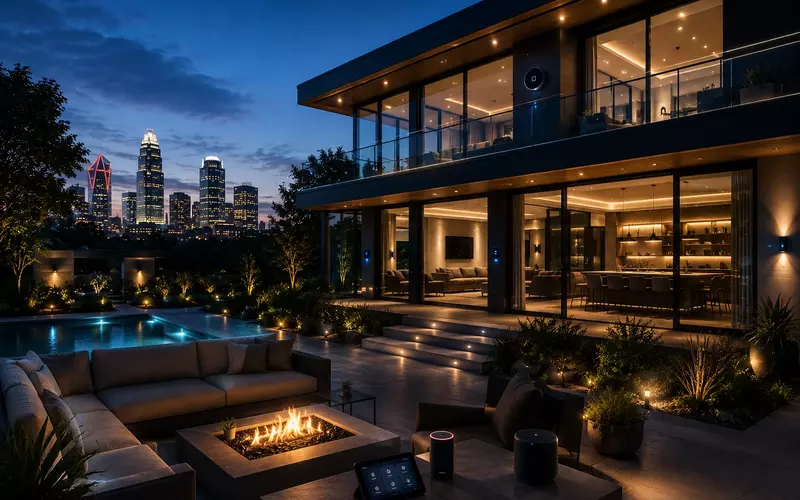
Planning a smart home is exciting, but one of the first questions homeowners ask is: How much does a smart home installation cost in Charlotte?
The answer depends on the size of the home, the systems you want to automate, and whether you are building a new residence or upgrading an existing one. Some projects begin with automated lighting and a video doorbell. Others integrate lighting, climate, entertainment, networking, security, motorized shades, and whole-home control.
This guide explains the major pricing factors, realistic investment ranges, and practical ways to budget for a professionally designed smart home.
What Determines the Cost?
Every project is different. The largest cost drivers usually include:
- Home size and number of rooms
- New construction or retrofit conditions
- Desired level of automation
- Audio and video equipment
- Lighting control and motorized shades
- Structured wiring and network infrastructure
- Whole-home audio and home theater
- Security and access-control integration
- The selected control platform
Professional installation also includes engineering, programming, testing, documentation, and commissioning—not simply installing hardware. Those services are what turn individual products into a reliable, understandable system.
Typical Smart Home Investment Ranges
These planning estimates represent professionally installed systems in the Charlotte area. Final pricing depends on equipment selections, finish expectations, site conditions, and project complexity.
| Project type | Typical investment |
|---|---|
| Smart lighting starter package | $3,000–$8,000 |
| Whole-home Wi-Fi and networking | $5,000–$15,000 |
| Whole-home audio | $8,000–$30,000+ |
| Home theater | $15,000–$100,000+ |
| Motorized shades | $10,000–$80,000+ |
| Integrated smart home | $30,000–$250,000+ |
| Luxury estate automation | $250,000+ |
These ranges include equipment and professional integration services. A detailed design and site assessment are required before an integrator can provide a reliable proposal.
New Construction vs. Existing Homes
New construction
Building a new home offers the greatest flexibility and is usually the most cost-effective time to install smart technology. The project can include a dedicated equipment room, structured low-voltage wiring, discreet speakers and access points, prewiring for shades, and pathways for future expansion.
Installing this infrastructure before drywall is generally much less expensive than opening finished walls later. Early coordination also gives the architect, interior designer, electrician, HVAC contractor, and technology integrator time to resolve equipment locations and controls cleanly.
Existing homes
Retrofitting an existing home may require fishing new cables, selective drywall repair, wireless alternatives, additional labor, and more creative equipment placement. Modern wireless and hybrid systems make many upgrades possible without extensive renovation, but retrofit projects often need additional planning to balance performance with disruption.
Major Systems That Affect the Budget
Lighting control
Professional lighting provides scenes, schedules, occupancy sensing, vacation modes, daylight response, and coordinated outdoor lighting. Platforms such as Lutron, KNX, and DALI cover different project types and control requirements.
Networking
Every smart home depends on a reliable network. A professional design may include enterprise Wi-Fi, PoE switching, structured cabling, an equipment rack, UPS backup, remote monitoring, and fiber-ready pathways. Many symptoms blamed on smart devices are actually network problems, making network infrastructure one of the most important investments.
Home theater
Home theater pricing varies dramatically with display or projection technology, audio performance, acoustic treatment, seating, lighting, and automation. A professionally designed room delivers a very different result from simply mounting a large television.
Multi-room audio
Distributed audio may cover kitchens, living areas, patios, pools, primary suites, and other entertainment spaces. Centralized equipment and coordinated control provide synchronized playback and a cleaner installation than a collection of portable speakers.
Motorized shades
Automated shades improve comfort, privacy, energy performance, UV protection, and convenience. They can respond to sunrise, sunset, temperature, occupancy, or lighting scenes. Shade fabric, window size, pocket details, power, and control integration all affect cost.
Choosing the Right Automation Platform
Different homes require different solutions. A professional integrator should select platforms around the project requirements instead of forcing every property into a single product ecosystem.
Common options include KNX, Crestron, Control4, Lutron, and Q-SYS, with BACnet or Modbus used where building-system integration requires them. Larger homes often combine several technologies behind one unified control experience.
Costs Homeowners Often Miss
Hardware is only one part of the investment. When comparing proposals, look for the professional services needed to deliver and support the finished system:
- System design and documentation
- Rack assembly and configuration
- Programming and interface setup
- Testing and commissioning
- Homeowner training
- Remote support and monitoring
- Software updates and system backups
Two proposals with similar hardware can produce very different outcomes when one includes engineering, commissioning, documentation, and a clear service plan.
How to Save Money Without Sacrificing Quality
Install infrastructure now
Running cable and conduit during construction costs far less than remodeling later. A thoughtful structured cabling plan protects future choices even when every system is not installed immediately.
Build in phases
Many homeowners begin with networking and lighting, then expand into audio, theaters, shades, and broader automation. Phasing works best when the overall architecture is designed before the first phase begins.
Invest in networking first
Reliable infrastructure supports every future upgrade. It is usually a better first investment than adding more connected devices to an unstable network.
Choose scalable systems
Select platforms with the capacity, service path, and interoperability needed to grow with the home. Replacing a closed or undersized foundation later can erase any initial savings.
Frequently Asked Questions
Is a smart home worth the investment?
For many homeowners, the value comes from convenience, comfort, reliability, and a better daily living experience rather than simply controlling devices with a phone.
Can I automate an existing home?
Yes. Many systems can be installed in finished homes using a combination of wired and wireless technologies. A site assessment helps determine where new cabling is practical and where wireless products are the better fit.
How long does smart home installation take?
Simple projects may take a few days. Complete custom homes often require design and coordination throughout construction, followed by installation, programming, testing, and final commissioning.
Do smart homes require monthly fees?
Most professionally installed automation systems do not require a subscription for core functionality, although cloud services, remote monitoring, and some security services may carry optional or required fees.
Can I expand my smart home later?
Yes. A professionally designed system can grow with the home when the initial plan includes scalable platforms, adequate network capacity, spare rack space, and suitable wiring or pathways.
Why Work With a Professional Integrator?
A successful smart home is more than connected devices. Professional integration brings system planning, infrastructure design, equipment selection, programming, documentation, testing, and long-term support into one coordinated process.
This approach helps lighting, networking, audio, video, climate, security, and automation operate as a unified system instead of a collection of independent products. Whether you are building a luxury residence, remodeling an existing home, or upgrading selected rooms, involving the integration team early preserves more options and helps control total installation cost.
Ready to Plan Your Smart Home?
If you are considering a smart home project in the Charlotte area, AVgator can evaluate your goals, recommend appropriate technologies, and design an automation system around your home and lifestyle. Start with a thoughtful plan for networking, lighting control, home theater, distributed audio, or complete whole-home automation.
Schedule a project consultation with AVgator to discuss the scope, construction timeline, and priorities for your Charlotte smart home.